
Signal in the Valleys: A Mobile Internet Guide for Autumn Drives Through the Swiss Alps
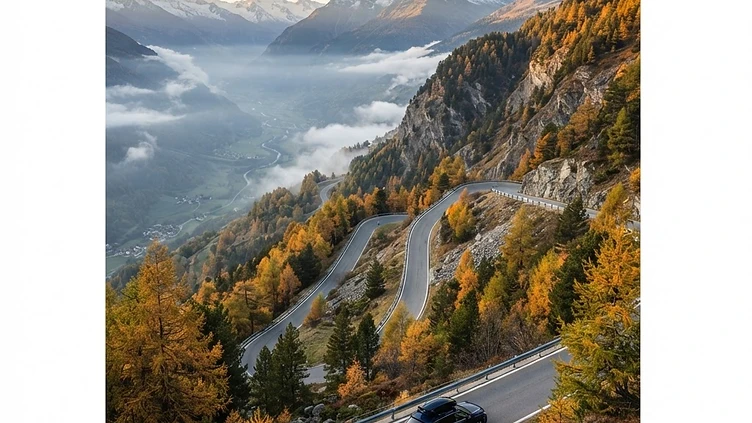
There's a particular kind of magic to driving through the Swiss Alps in October, when the larches turn gold against the dark green of the pines and the valley floors fill with low morning mist. It's one of Europe's great autumn drives, winding through passes, past lakeside villages, and up into alpine meadows that look like something out of a postcard. But if you've ever lost your map mid-switchback or watched a video call freeze right as you're trying to confirm a hotel booking, you know that mountain connectivity has a mind of its own. A little planning goes a long way toward keeping your phone useful, not just your camera roll full.
Why Mobile Signal Behaves Differently in the Mountains
Alpine terrain is beautiful precisely because it's dramatic, and that drama is exactly what interferes with mobile networks. Signal travels in fairly straight lines, so a ridge, a tunnel, or a deep valley can block a tower's reach even if you're only a few kilometers from a town with strong coverage. Add in the seasonal surge of autumn travelers following foliage routes, and popular viewpoints can feel more crowded on the network than they look on the road.
A few things worth knowing before you set off:
- Coverage is generally excellent in towns and along major valley roads, but can drop sharply in high passes, tunnels, and narrow side valleys.
- Weather matters more than people expect. Heavy autumn fog or early snow at higher elevations can affect both driving conditions and signal strength.
- Villages that feel remote often still have decent coverage near the center, even if it fades quickly once you're on a hiking trail or forest road.
Planning Your Route With Connectivity in Mind
The single best habit for an autumn alpine road trip is downloading everything before you need it. Offline maps, translated phrases, train or cable car schedules, and even restaurant reservations should all be saved locally rather than relying on real-time lookups.
- Download offline map regions for each valley or canton you'll pass through, not just your final destination.
- Save screenshots of key information: accommodation addresses, emergency numbers, and any pre-booked activity confirmations.
- Note the names of towns along your route where you know you'll have a strong connection, so you can plan calls, uploads, or bookings for those stretches.
- If you're using a car with built-in navigation, treat your phone's offline maps as a backup, not an afterthought.
This kind of preparation matters more in shoulder season than in summer, simply because autumn light fades earlier and weather can shift quickly, making it less appealing to improvise a new route on the fly without a reliable map.
Making the Most of a Travel eSIM in Alpine Terrain
A travel eSIM is a practical tool for this kind of trip, mainly because it lets you get connected the moment you land without hunting for a local shop in an unfamiliar town. Once installed, it works the same way a local SIM would, drawing on regional networks as you move between valleys. The main thing to remember is that no SIM, physical or digital, can create signal where there isn't a tower. Think of your eSIM as the key that unlocks whatever network is available, while your offline downloads are the insurance policy for the gaps in between.
If your itinerary includes neighboring countries as part of a broader Alpine loop, through Austria, northern Italy, or the French Alps, it's worth checking whether your plan covers the full region before you cross a border, so you're not caught switching networks mid-drive.
Timing Your Data-Heavy Tasks
Autumn travelers often want to do three things at once: photograph the view, check the weather for tomorrow's pass, and post a quick update home. Trying to do all three in a spot with weak signal is a recipe for frustration.
- Handle uploads, bookings, and video calls when you're parked in a village center or at a known rest stop with good coverage.
- Check weather and road condition updates each morning before climbing to higher elevations, since forecasts can change route plans quickly in October.
- Keep a portable charger in the car, since phones searching for weak signal in the mountains tend to drain battery faster than usual.
Final Checklist for an Autumn Alpine Road Trip
Before you start the engine, run through this short list:
- Offline maps downloaded for every region on your route
- Accommodation and activity confirmations saved locally, not just in your inbox
- A travel eSIM installed and activated so you're ready to connect the moment you arrive
- A portable charger packed and topped up
- A mental note of two or three towns along the way where you know coverage will be reliable
With these basics sorted, the only thing left to track is the color of the leaves, not the bars on your phone.
Stay connected in Switzerland
Planning a trip to Switzerland? Skip airport Wi-Fi queues and roaming surprises — a Falcosim Switzerland eSIM keeps you online from the moment you land.